
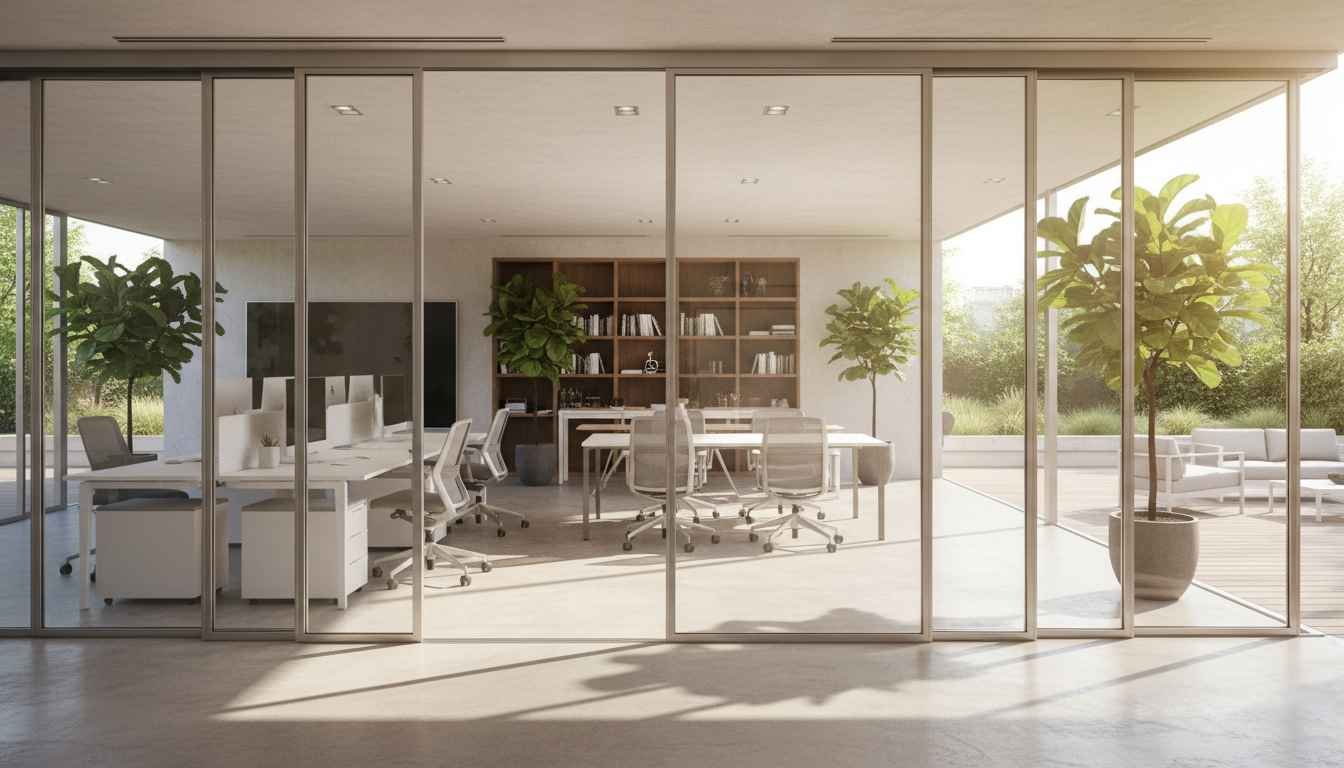
Many business owners assume that traditional hinged doors are the only professional choice for office environments. This is a misconception. Sliding doors offer a refined, modern alternative that not only elevates aesthetics but also enhances functional efficiency.
Quick Definitions
Sliding Door: A door that moves horizontally along a track, saving space and providing seamless access.
Office Flow: The ease with which employees and clients navigate a workspace.
Natural Light Optimization: Using transparent or semi-transparent surfaces to maximize daylight exposure.
One of the most immediate advantages of sliding doors is the space-saving benefit. Unlike traditional doors that require a swing area, sliding doors glide along a track, freeing up valuable square footage. This is particularly useful in smaller offices or coworking spaces where every inch counts. Additionally, sliding doors can create a more open atmosphere, allowing teams to communicate visually while maintaining acoustic privacy when needed.
Light management is another subtle but powerful advantage. Many sliding doors feature glass panels that allow natural light to permeate interior spaces. Studies have shown that environments with ample daylight improve mood and productivity. A well-lit office also reduces reliance on artificial lighting, contributing to energy efficiency – an understated benefit for both budgets and environmental responsibility.
Durability and low maintenance are practical considerations. Sliding doors are often engineered with high-quality materials, minimizing wear and tear from frequent office use. Their sleek tracks and minimal hardware make them easier to clean and maintain compared to complex hinge systems. For businesses seeking a polished professional appearance, this combination of style and functionality is invaluable. Companies exploring modern office solutions, meeting rooms, and coworking spaces can find tailored options at Alliance Virtual Offices, ensuring their workspace reflects sophistication and efficiency.
Enhanced Accessibility
Sliding doors provide effortless accessibility for all visitors, including clients with mobility challenges. Wide, unobstructed openings support easy passage for wheelchairs, carts, and equipment, reducing bottlenecks during peak business hours. This accessibility aligns with inclusivity best practices, reinforcing a business’s commitment to client and employee well-being.
Potential Drawbacks
Despite their advantages, sliding doors may not suit every business. Noise can travel more easily through glass panels, potentially disrupting highly confidential environments. Additionally, installation requires precise measurements and sturdy wall support to ensure smooth operation. Businesses with extremely high foot traffic may encounter faster wear on tracks if materials are not premium grade.
In summary, sliding doors combine elegance, efficiency, and modern appeal. They optimize space, enhance natural light, and improve accessibility while maintaining a professional image. When thoughtfully chosen and installed, they can transform a mundane office into a sophisticated, functional environment.
If you found this helpful, you might also want to explore Step-by-Step Guide for Finding for more insights on this topic.
As you consider the impact of design on your office environment, it’s fascinating to reflect on how the aesthetics of space have evolved over time; for a deeper understanding of this evolution, the work of the Sudbury History Society offers valuable archival insights.