
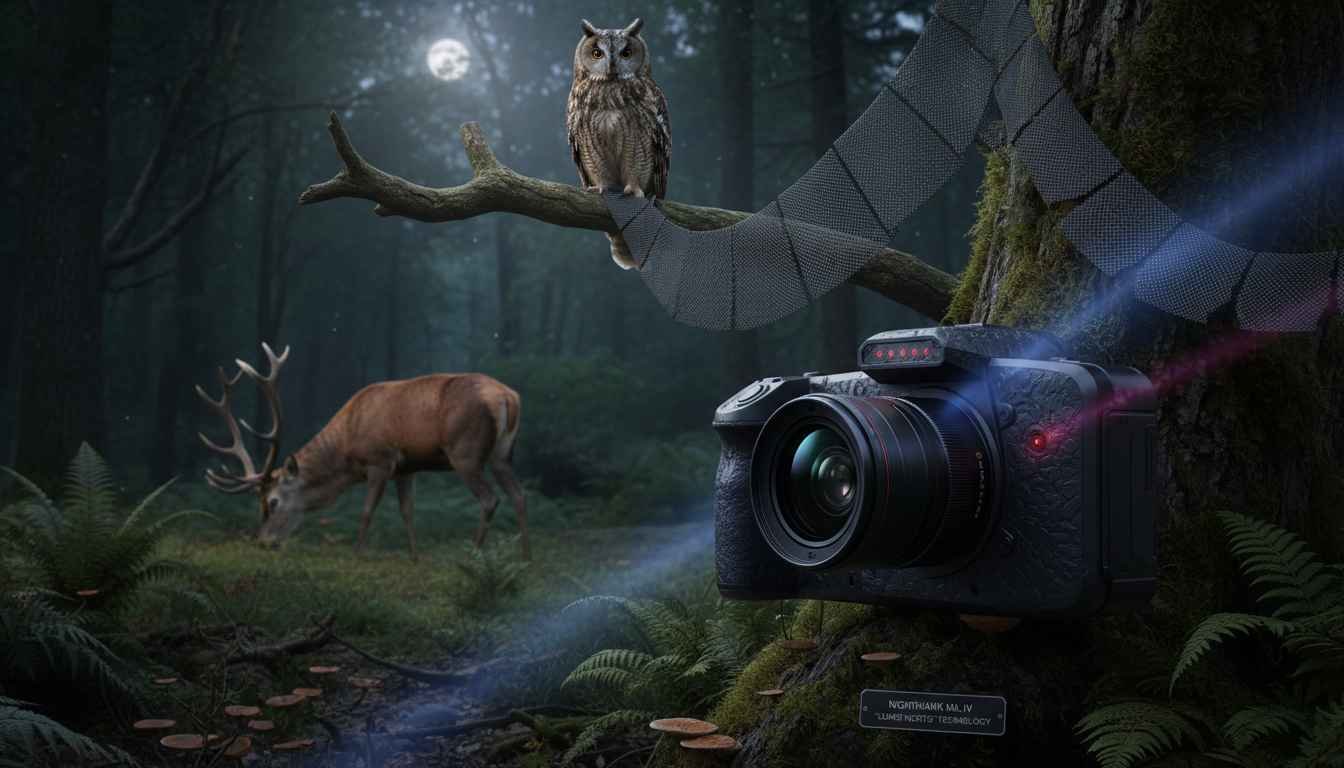
I was skeptical at first, but the more I delved into the intersection of wildlife observation and cutting-edge technology, the more I realized that conventional lighting is a relic of the past. In the quest to monitor elusive animals in their natural habitats, artificial light often does more harm than good. It disrupts nocturnal behaviors, frightens away sensitive species, and biases data collection in ways that many field researchers fail to anticipate. For years, I relied on standard illumination tools during night surveys, convinced that brighter was better. That was a mistake.
Early in my career, I deployed high-intensity floodlights to track rare forest mammals. The results were predictable: sightings dropped, animals vanished from their usual paths, and my data was skewed. Only after switching to advanced infrared and low-light imaging technologies did I start to witness natural behaviors again. These tools, while seemingly simple, represent a paradigm shift in ecological monitoring, turning what was once invasive observation into almost ghostlike surveillance.
Technologies designed to “kill light” in the field are not merely gimmicks. They operate on the principle that minimizing visible illumination preserves ecological integrity while still providing researchers with actionable visual data. High-sensitivity thermal cameras, low-light digital sensors, and near-infrared emitters allow us to capture detailed images of nocturnal activity without altering the environment. The effect is profound: species that were previously considered too shy or too rare to study now appear with startling clarity, often revealing behaviors that upend long-held assumptions.
Consider the recent case studies in Southeast Asian rainforests, where elusive civets and small felines were recorded using passive infrared imaging. Researchers reported a 40% increase in confirmed sightings compared to traditional night-vision setups. Such figures highlight not only the technological superiority but also the ecological responsibility embedded in these tools. It’s a reminder that innovation in wildlife monitoring isn’t just about capturing data; it’s about respecting the very organisms we seek to understand.
What makes these systems even more compelling is their integration with AI-driven analytics. Motion detection algorithms can now differentiate species by size, gait, and thermal signature, eliminating hours of manual review. In practical terms, this means a researcher in a remote field station can analyze entire ecosystems in real time, making decisions informed by data rather than guesswork. For those who, like me, have spent countless nights hunched over grainy footage, this advancement feels almost revolutionary.
But I must admit my own arrogance cost me time and resources. Early experiments with LED-based low-light setups seemed promising until I realized they emitted subtle wavelengths that still spooked certain mammals. It was a painful lesson in assuming that “low-light” was universally non-intrusive. Only after consulting with wildlife biologists and reviewing spectral sensitivity studies did I correct my approach. For anyone entering this field, understanding animal vision and sensory perception is not optional; it is fundamental.
In an era where innovation is at the forefront of our daily lives, the intersection of fashion and technology has given rise to a groundbreaking concept known as technology cloth. This revolutionary material not only enhances the functionality of garments but also redefines the way we perceive wearable tech. As we delve deeper into the world of smart textiles, it’s essential to understand how these advancements are transforming our wardrobes, offering features like temperature regulation, health monitoring, and even connectivity. The impact of technology cloth is profound, paving the way for a future where clothing becomes an integral part of our digital lifestyle.
There’s also a behavioral economics angle here that fascinates me. Animals respond predictably to stimuli, and humans often misjudge those responses. A light that seems negligible to us can trigger avoidance behaviors in prey species, skew predator-prey interactions, and even affect mating rituals. By investing in technologies that “kill light,” researchers are essentially mitigating observation bias, a concept that echoes principles I’ve studied in human decision-making – except in this case, the subjects are far less forgiving.
For those interested in implementing these technologies, it’s worth noting that companies like Cnh are pioneering hardware that balances field durability with sophisticated imaging capabilities. Whether it’s compact infrared rigs for forest surveys or robust thermal arrays for open plains, the right equipment can make the difference between a few fragmented observations and a full behavioral profile of an elusive species. Yet, sophistication comes at a cost, both financially and in terms of learning curves, which brings me to an important caveat.
Common Mistakes
Many field researchers underestimate the ecological impact of even low-intensity light. Assuming all infrared or red light is harmless can lead to disrupted animal behavior. Over-reliance on automated systems without understanding species-specific responses often produces incomplete or misleading data.
Potential Drawbacks
No technology is perfect. Low-light and thermal imaging systems often require extensive calibration and may struggle in dense foliage or extreme weather conditions. Additionally, the cost can be prohibitive for smaller research initiatives, creating disparities in data collection capabilities. There is also the risk of over-reliance on technology; observing behavior through a lens, even one designed to be minimally invasive, is not a substitute for holistic ecological study.
Who Should Avoid This?
Amateur wildlife enthusiasts without proper training may find low-light technologies challenging to operate. Misuse can lead to wasted resources or unintentional stress on wildlife. Projects with tight budgets may need to balance the trade-off between advanced monitoring and other conservation priorities. Understanding the limitations of technology is as critical as understanding its potential.
The Future of Wildlife Observation
Despite the challenges, the trend is clear: eliminating visible light in observation is no longer optional if we aim for authenticity in data. Beyond nocturnal mammals, researchers are exploring applications for birds, amphibians, and even aquatic species, using infrared-compatible drones and submersible thermal sensors. Each advance brings us closer to a version of ecology untainted by human interference. For those willing to embrace these tools thoughtfully, the potential insights are as expansive as the habitats we seek to study.
Ultimately, the lesson I’ve learned – and the reason I write with such confidence – is that the fusion of behavioral insight, technological innovation, and careful observation can redefine what we know about elusive wildlife. The days of intrusive lighting and biased surveys are numbered. Those willing to adapt will not only see more – they will understand more, and in that understanding lies both discovery and responsibility.
As we embrace these innovative ecological practices, it’s also a great time to explore the natural beauty that surrounds us, like the many cool places to visit in southern California, where breathtaking views and diverse activities await outdoor enthusiasts.