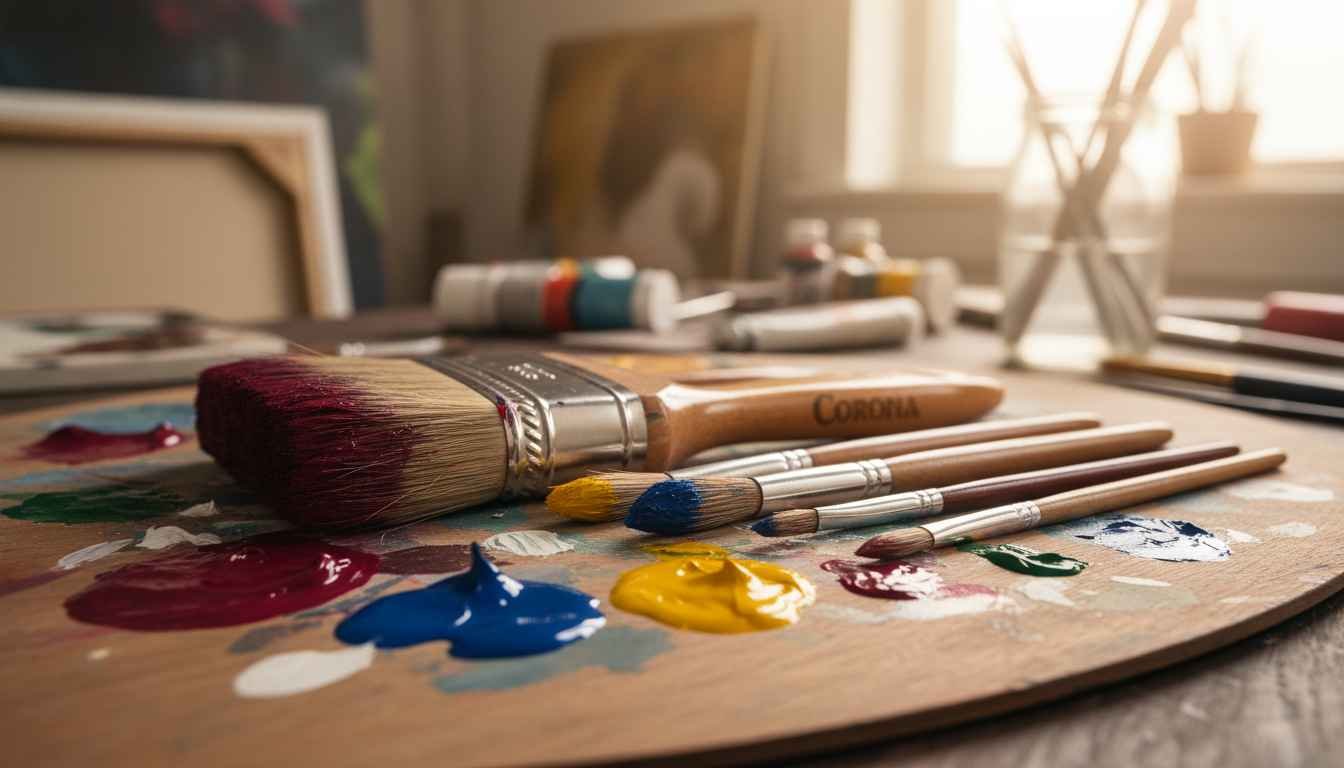
“Still using the same brush you bought five years ago?” That comment ricocheted through creative feeds, sparking a deeper conversation about tools, craft, and why corona paint brushes keep resurfacing whenever professionals talk longevity.
1930s–1940s The Foundation Of A Protected Idea
From a patent attorney’s lens, the early story of corona paint brushes begins with more than bristles and handles. It begins with protectable design choices. During this era, brush makers invested in ferrule construction, filament anchoring, and balance, filing utility and design patents to lock in consistency and durability.
These early protections mattered. They allowed manufacturers to iterate without fear of immediate imitation, giving artists reliable tools during a time when animation cells, background painting, and matte work demanded precision.
1950s–1970s When Craft Met Industrial Scale
As animation studios expanded, so did the expectations placed on tools. Corona paint brushes became known for even paint release and reduced shedding, traits not accidental but engineered. Patent records from mid-century show a surge in filings related to synthetic filament blends, responding to oil and early acrylic paints.
This period aligned with formal research into materials science. Institutions like the National Institute of Standards and Technology documented coating behavior and application efficiency, grounding brush innovation in measurable performance. An example of this authoritative research can be found at https://www.nist.gov.
1980s–1990s The Animation Boom And Tool Reliability
With television animation accelerating production schedules, brush failure became expensive. Corona paint brushes earned trust because they held shape under repeated cleaning cycles. As someone trained to assess infringement risk, I see this era as a quiet victory for original engineering that competitors struggled to replicate without crossing legal lines.
Trade publications, including Animation World Network, frequently highlighted the behind-the-scenes importance of dependable tools, reinforcing that innovation is as critical off-camera as it is on screen.
2000s–Present Sustainability And Compliance
Modern timelines introduce environmental compliance and consumer safety. Today’s corona paint brushes reflect regulations around adhesives, coatings, and manufacturing disclosures. According to U.S. Environmental Protection Agency data, improved application tools can reduce paint waste by measurable percentages, often cited between 10–15 percent depending on surface and medium.
Reality Check Expectations Versus Reality
Expectation: a premium brush guarantees perfect strokes. Reality: even the best-engineered brush amplifies skill, it does not replace it. Corona paint brushes reduce variability, but technique still governs outcome.
Who Should Avoid This
If your workflow prioritizes disposable tools for rapid experimentation, corona paint brushes may feel excessive. Their value is realized over time, not in single-use scenarios or rough exploratory work.
Viewed through the lens of intellectual property and creative history, corona paint brushes represent how protected innovation quietly shapes artistic industries for decades.
As you refine your painting skills and explore the world of artistic tools, consider taking a break to enjoy the stunning landscapes of Washington State; there are many fun places to visit that offer breathtaking views and a variety of outdoor activities to inspire your creativity even further.