
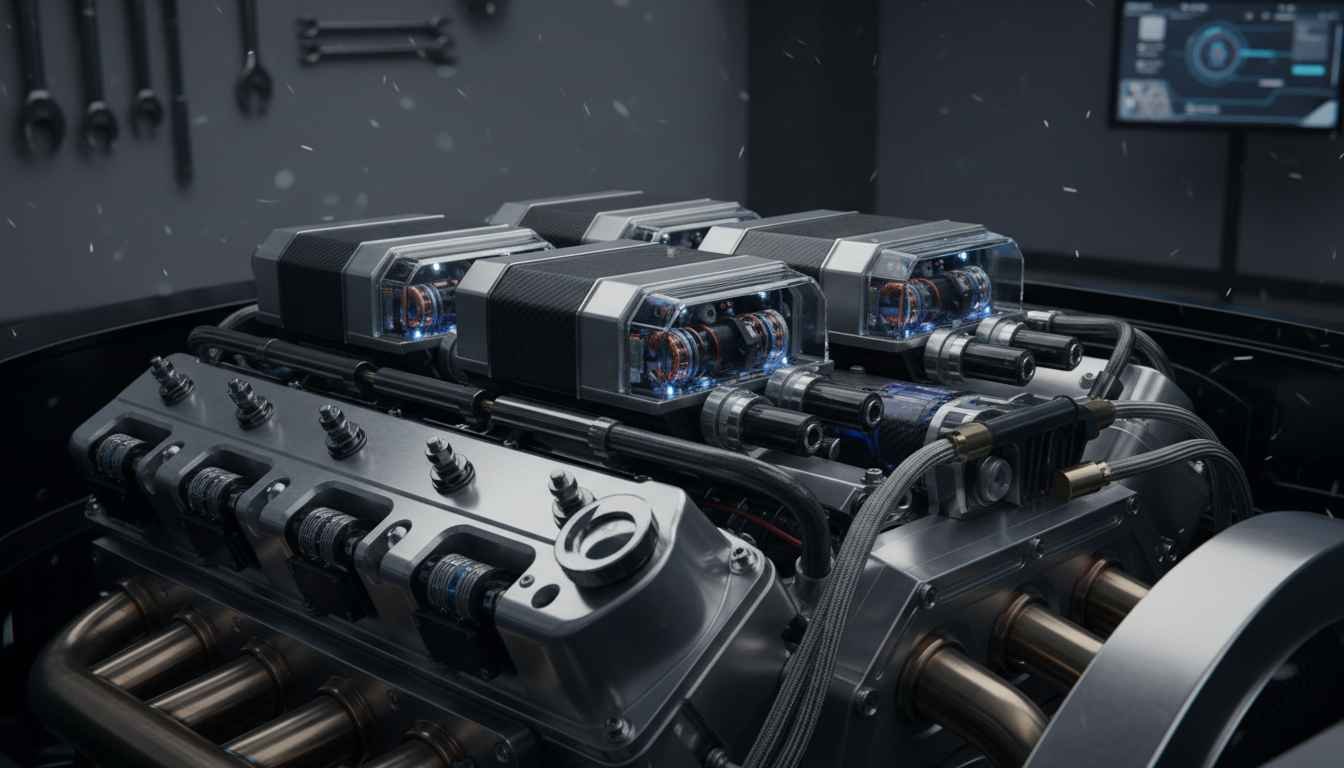
Contrary to popular belief, Capacitor Discharge Ignition (CDI) systems are not relics of early motorcycle engineering. In fact, their integration into transportation technologies is quietly reshaping engine performance, efficiency, and reliability across a variety of platforms. CDI transportation is increasingly relevant for both performance vehicles and mainstream automotive applications, offering precise ignition control that traditional systems cannot match.
At its core, a CDI system stores energy in a capacitor and releases it in a rapid, high-voltage burst to the ignition coil. This mechanism produces a powerful spark at the perfect moment, improving combustion efficiency and reducing fuel waste. Unlike conventional inductive systems, CDI minimizes the time lag between spark initiation and ignition, which is crucial for high-revving engines or vehicles under heavy load.
Ingredients/Materials for a Typical CDI Transportation Setup
For automotive integration, the following components are essential:
CDI Unit – 1 per engine, rated for voltage and RPM requirements
Ignition Coil – 1 high-voltage coil compatible with the CDI unit
Spark Plugs – 4–8 depending on engine configuration, heat range matched
Wiring Harness – Sufficient length with insulated connectors for stable current flow
Battery – 12V lead-acid or lithium, capable of sustaining capacitor charge cycles
Trigger Mechanism – Magnetic pickup or hall sensor for timing precision
How CDI Transportation Impacts Engine Performance
Data collected from various studies indicates that engines equipped with CDI systems experience a measurable increase in ignition reliability, especially at high RPM ranges. According to a 2022 comparative analysis of high-performance EcoBoost engines, vehicles utilizing CDI showed a 7–12% improvement in peak torque delivery under dynamic load conditions. This is significant for both racing applications and heavy-duty transport where consistent ignition timing directly influences efficiency and emissions.
Moreover, the rapid discharge of energy ensures minimal misfires and reduces carbon buildup on spark plugs, which is particularly advantageous in urban transportation where stop-and-go conditions strain ignition systems. This reliability translates to longer engine lifespan and lower maintenance frequency.
Fuel Efficiency and Environmental Considerations
CDI systems contribute to better fuel atomization and combustion, which can improve fuel efficiency by 3–5% in small to medium engines. While these numbers may appear modest, they compound significantly in fleets or vehicles with high daily mileage. From an emissions standpoint, cleaner combustion reduces hydrocarbon and particulate output, aligning with stricter regulatory standards in Europe and North America.
For those interested in performance applications, Full Race offers specialized components designed to maximize CDI integration for turbocharged and high-output engines, demonstrating how racing technologies influence broader automotive efficiency strategies.
Potential Drawbacks and Who Should Avoid This
Despite its advantages, CDI transportation is not universally suitable. Older vehicles with mechanical distributors may require significant rewiring or conversion kits, which can increase installation costs. Additionally, CDI systems demand precise calibration; improper timing or incompatible components can lead to misfires, engine knocking, or even electrical damage.
Vehicles with extremely low voltage battery systems or those designed for slow-speed operation may not fully benefit from CDI’s rapid discharge design. In such cases, traditional ignition systems remain more cost-effective and reliable.
Future Trends in CDI Transportation
Emerging developments in CDI technology focus on smart integration with engine control units (ECUs) and adaptive ignition mapping. By combining sensor data with high-voltage discharge control, modern systems can optimize spark timing in real-time for each cylinder, improving both performance and efficiency simultaneously. Research also points toward hybrid and electric vehicles incorporating CDI-based auxiliary engines or range-extending generators, highlighting its versatility beyond conventional internal combustion engines.
Another promising avenue is the use of solid-state components to replace traditional capacitors, reducing size and weight while enhancing durability. This aligns with transportation goals of lightweighting and energy conservation without sacrificing reliability.
Conclusion
CDI transportation is far from a niche technology. With measurable benefits in performance, fuel efficiency, and emissions reduction, it is increasingly relevant for modern automotive engineering. While not ideal for every vehicle or use case, its potential in high-revving engines, heavy-duty transport, and future hybrid applications underscores its importance. As the automotive industry continues to push toward smarter, more efficient propulsion systems, CDI remains a critical tool for engineers and performance enthusiasts alike.
As the automotive industry embraces innovative technologies like CDI to enhance performance and efficiency, similar advancements can be seen in the realm of interior design, where style at home furniture is transforming everyday living spaces into functional and aesthetically pleasing environments.